Home / What We Do
What we do

The Beacon fills the gap between crisis and long-term independence. We provide safety, structure, and accountability, then the time and community it takes to rebuild. The program is structured, but it is never punitive, and every woman is treated with dignity and respect.

The wellness model
SAMHSA's Eight Dimensions of Wellness are the spine of the whole program, not a topic covered once. Every phase names a wellness focus, every phase asks for documented work across all eight, and graduation asks for six months of progress in each.
Why eight?
“
Someone can be sober and still unhoused, employed and still isolated, financially stable and still without a doctor. Keeping all eight visible means progress in one area cannot hide a gap in another.

Health, sleep, nutrition, medical and dental care, and sobriety.

Regulation, coping skills, therapy, and self-awareness.

Learning, curiosity, and digital and financial literacy.

Healthy relationships, the house community, and support networks.

Meaning, values, and purpose, however each woman defines them.

Work, vocational growth, and contribution.

Income, budgeting, saving, and banking.

Safe and stable surroundings, housing, and personal space.

The continuum
From structured recovery housing, to permanent affordable housing, to years of support after graduation. Sherman Hill is where she builds the foundation. The Village is where she practices independence.
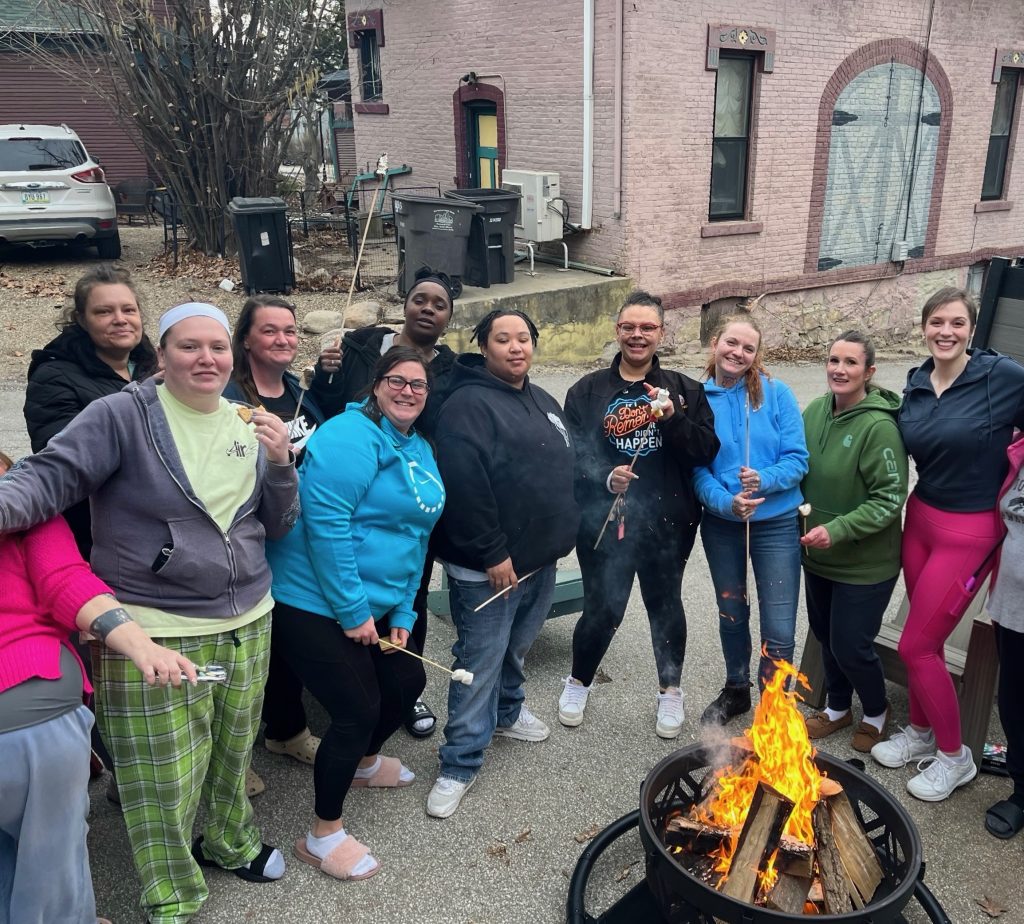
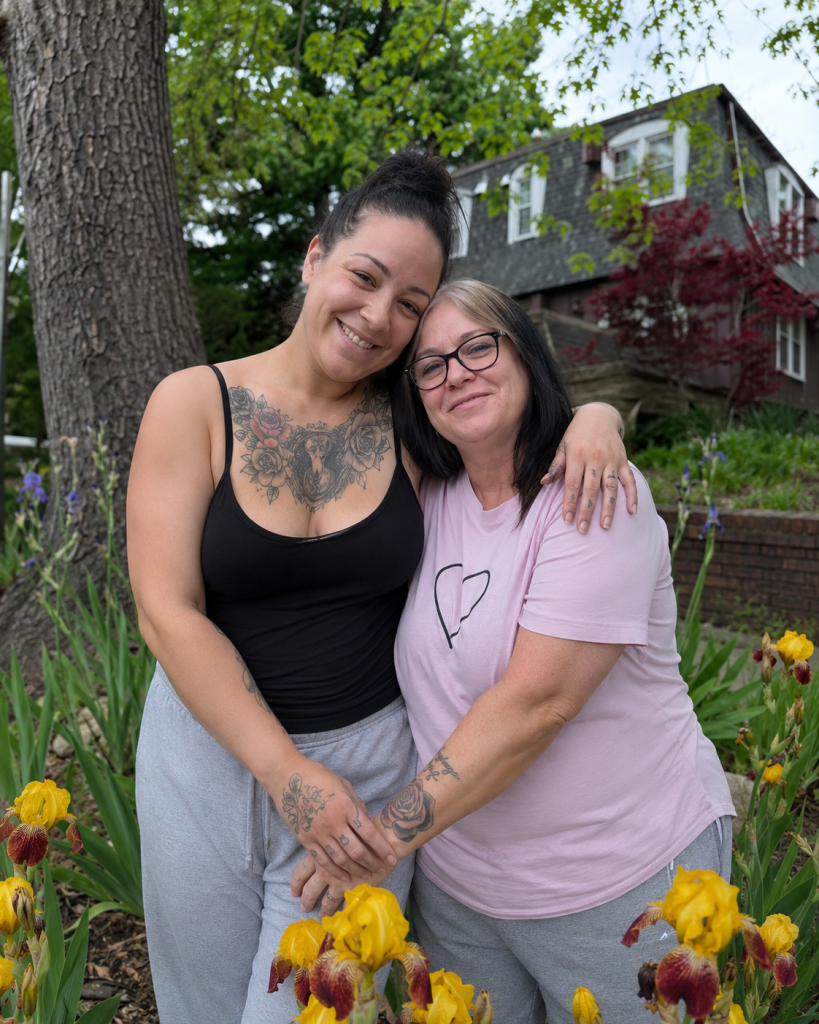
Shared, structured transitional recovery housing. Women live together in the house, work through six phases at their own pace, and leave with the things that keep housing stable. Peer-supported and non-clinical, with weekly case management, employment readiness, financial coaching, and a community of women doing the same work.
Capacity
34 beds
Length of stay
6 to 24 months
Program
Six phases
Program fee
$105 a week
Rooms
Up to 4 women
To apply
30 days sober
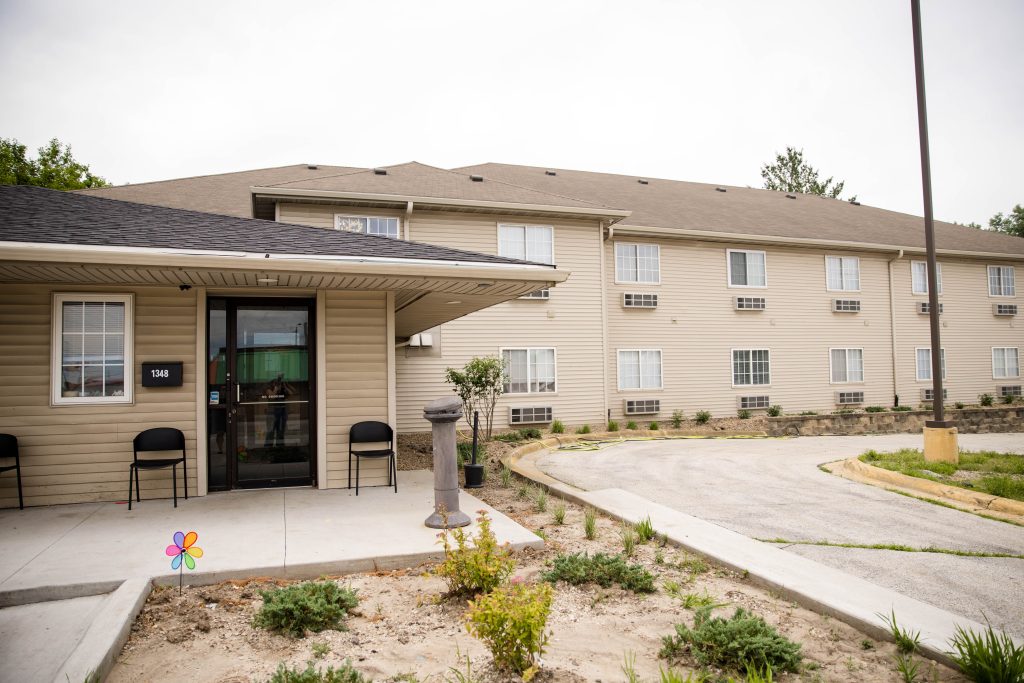
Permanent, affordable apartment living in recovery, and the first NARR apartment community of its kind in the U.S. Each woman has her own studio and signs her own lease, building real rental history, often for the first time, with a Case Manager and a community of women beside her.
Apartments
32 studios
Monthly rent
$690 to $900
Included
Utilities, Wi-Fi, laundry
Lease
One year, her own
To apply
6 months sober
Certification
NARR Level II

Up to three years
Most programs end at the door. Ours does not. Women who complete Sherman Hill keep support for up to three years, through the stretch when the risk of returning to use is still elevated. Today the Graduate Program supports 71 women.

For mothers in the program
Children cannot live at Sherman Hill. Bridges to Stability lets a resident who has, or is gaining, custody of her children keep her place in the program while living with them. It is earned in Phase 5 or above, and every requirement of her phase still applies.

Why it is built this way
Housing instability, incarceration, and return to use are not three separate problems that happen to the same women. They are one loop, and each pass makes the next more likely. Nothing in it is a failure of willpower. It is a structural loop, and it can be cut.
01
The days right after release or treatment are the riskiest. Phase 1 gives her a bed, a locked door, a predictable day, and a Case Manager before she is asked to do anything else.
02
No income means no housing, and no housing means no income. Phases 2 and 3 break the deadlock with verified work, financial coaching, digital literacy, and a savings ladder from $100 to $600.
03
Who a woman is surrounded by shapes whether recovery holds. Leadership, House Council, mentoring, and service build a recovery network to replace a using network.
04
Most programs end at the door, right where the cycle restarts. She graduates with a lease, savings, insurance, and a doctor, and the Graduate Program stays with her for three years.
The evidence behind the design
In a randomized study of 150 people leaving treatment, those placed in a communal recovery residence did better on every measure. Length of stay is the active ingredient, so The Beacon requires at least six months to graduate.
31%
Reported substance use, vs 65% with usual care
76%
Employed, vs 49% with usual care
3%
Incarcerated, vs 9% with usual care
16%
Substance use after six months or more in recovery housing, vs 46% for shorter stays
Sources: Jason, Olson, Ferrari and Lo Sasso (2006), American Journal of Public Health, 96(10). Figures at 24 months, rounded.

Real results, lasting change
✓ A signed lease or verified stable housing
✓ Legal, sustainable income
✓ $600 in savings and an active bank account
✓ Health insurance, a primary care provider, and a women's health provider
✓ Six months of documented progress across all eight dimensions
✓ Up to three years of Graduate Program support
85%
of graduates who stay in contact are still housed, still in recovery, and out of incarceration three years after graduation.
Follow-up is voluntary, so this reflects graduates who stay connected through our Graduate Program. A return to use of fewer than 30 days tied to a specific life event is not counted as sustained.